

 Türkçe
  English
  Русский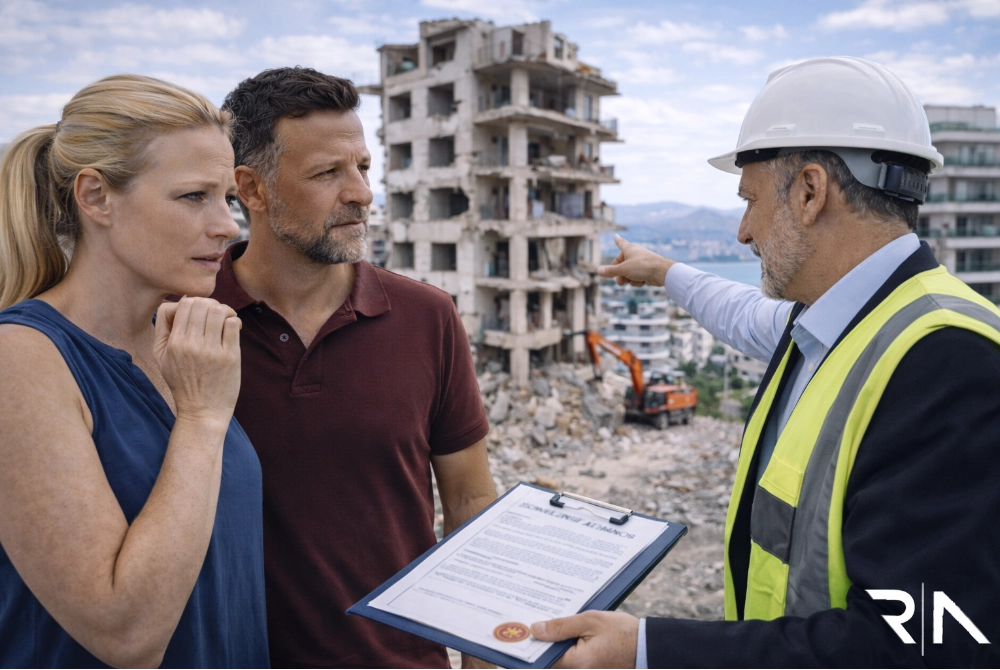
Urban transformation (kentsel dönüşüm) is one of Turkey's largest ongoing infrastructure programmes, aimed at replacing earthquake-vulnerable buildings with modern, code-compliant structures. Governed by Law No. 6306 on the Transformation of Areas Under Disaster Risk, the programme directly affects property owners — including foreign nationals — who own apartments or buildings identified as "risky" (riskli yapı). For foreign buyers in Antalya, understanding urban transformation is essential: it can represent a significant investment opportunity through modern replacement housing, or a serious risk if a purchased property is later designated for demolition. This guide explains the legal framework, the transformation process, owner rights, the 2023 amendments that lowered the voting threshold, and what foreign property owners in Antalya need to know to protect their investment.
What Is Urban Transformation (Kentsel Dönüşüm)?
Urban transformation in Turkey is a government-mandated programme to identify, demolish, and rebuild structures that do not meet current earthquake resistance and building safety standards. The programme was established by Law No. 6306 on the Transformation of Areas Under Disaster Risk (Afet Riski Altındaki Alanların Dönüştürülmesi Hakkında Kanun), enacted in 2012 and significantly amended by Law No. 7471 in November 2023.
Turkey is located in one of the world's most seismically active zones. The devastating earthquakes in Kahramanmaraş in February 2023, which caused over 50,000 deaths and destroyed tens of thousands of buildings, dramatically accelerated the urgency of urban transformation across the country. In Antalya, where a significant portion of the housing stock was constructed before modern earthquake building codes were adopted, the programme has particular relevance for both Turkish and foreign property owners.
The programme operates through three primary models. The first is the direct transformation of individual risky buildings identified through engineering assessments. The second is the comprehensive transformation of designated risky areas (riskli alan) where multiple buildings or entire neighbourhoods are earmarked for demolition and reconstruction. The third is the designation of reserve building areas (rezerv yapı alanları) where new housing is constructed to accommodate displaced residents. Following the 2023 amendment, existing settlements can now also be designated as reserve building areas — a significant expansion of the programme's scope.
How Is a Building Declared "Risky" in Antalya?
The process of declaring a building as risky follows a structured legal procedure administered by the Ministry of Environment, Urbanisation and Climate Change (Çevre, Şehircilik ve İklim Değişikliği Bakanlığı) and the Kentsel Dönüşüm Başkanlığı (Urban Transformation Presidency).
Step 1 — Engineering Assessment
Any property owner (including foreign nationals) can request a risk assessment for their building by engaging a Ministry-licensed engineering firm. Alternatively, the Ministry or local municipality in Antalya may initiate assessments for buildings or areas identified as potentially risky. The engineering firm conducts a structural analysis of the building, evaluating its earthquake resistance against current Turkish Building Earthquake Regulations (Türkiye Bina Deprem Yönetmeliği — TBDY).
Step 2 — Risky Building Report
If the assessment determines that the building does not meet current earthquake safety standards, the engineering firm submits a risky building report (riskli yapı raporu) to the Ministry. The report details the structural deficiencies and confirms that the building poses a risk to life safety.
Step 3 — Registration and Notification
Upon acceptance of the report, the Ministry annotates the risky building determination in the title deed (tapu) records at the Land Registry in Antalya. All property owners — including foreign nationals — are formally notified of the determination.
Step 4 — Objection Period
Property owners who disagree with the risky building determination have 15 days from notification to file an objection with the district or provincial administrative board. If the objection is rejected, owners may file an annulment lawsuit with the administrative court within 30 days. Only individuals whose direct property interests are affected — owners and holders of limited real rights (sınırlı ayni hak sahipleri) — have standing to file such lawsuits.
| Stage | Timeline | Key Actions |
|---|---|---|
| Engineering assessment | 2 – 4 weeks | Structural analysis by licensed firm |
| Report submission to Ministry | 1 – 2 weeks | Risky building report filed |
| Title deed annotation | 1 – 2 weeks | Annotation registered at Land Registry |
| Owner notification | Immediate after annotation | Formal notice to all owners |
| Objection period | 15 days from notification | Administrative objection to provincial board |
| Court challenge (if needed) | 30 days from objection rejection | Annulment lawsuit at administrative court |
| Evacuation period | 60+ days after final determination | Building must be vacated |
| Demolition | After evacuation deadline | Building demolished by owners or municipality |
The 2023 Amendment: New Voting Threshold and Its Impact
Law No. 7471, published in the Official Gazette on 9 November 2023, introduced significant amendments to Law No. 6306 that directly affect how urban transformation decisions are made. The most consequential change concerns the voting threshold for owner decisions.
From Two-Thirds to Absolute Majority
Prior to the amendment, decisions regarding the transformation of a risky building — including the construction plan, contractor selection, and unit allocation — required the affirmative vote of owners holding at least two-thirds (2/3) of the total ownership shares. The 2023 amendment reduced this threshold to an absolute majority (50% + 1) of ownership shares. This change was specifically designed to overcome the blocking power of minority owners who refused to participate in the transformation process, which had stalled hundreds of projects across Turkey including in Antalya.
Consequences for Dissenting Owners
Under both the original law and the amendment, owners who do not consent to the transformation decision face the compulsory sale of their shares. The ownership shares of dissenting owners are first offered to the other consenting owners at the appraised value. If no consenting owner purchases the shares, they are auctioned to third parties. In designated risky areas and reserve building areas, unclaimed shares may be registered in the name of the Treasury.
This mechanism means that foreign property owners in Antalya who oppose a transformation decision cannot indefinitely block the process — their shares may be compulsorily acquired. Understanding this risk before purchasing older buildings in Antalya is critical.
Voting threshold: Reduced from 2/3 majority to absolute majority (50%+1) of ownership shares for transformation decisions.
Reserve building areas: Expanded to include existing settlements, not only new settlement areas as before.
Parcel merging: Facilitated the merger of adjacent parcels to create viable transformation project areas.
Dissenting owner shares: Strengthened mechanisms for compulsory acquisition and auction of non-consenting owner shares.
Government coordination: Enhanced the role of the Urban Transformation Presidency (Kentsel Dönüşüm Başkanlığı) in coordinating projects.
Foreign Property Owners: Your Rights and Obligations
Foreign nationals who own property in Turkey — including in Antalya — have the same rights and obligations as Turkish citizens under the urban transformation framework. Law No. 6306 does not distinguish between Turkish and foreign property owners in the transformation process.
Equal Voting Rights
As a property owner in Antalya, you have the right to participate in all owner meetings, vote on transformation decisions, and submit objections or court challenges on the same terms as Turkish owners. Your voting power is proportional to your ownership share in the building.
Right to Replacement Property
When a risky building is demolished and rebuilt, each owner is entitled to a unit in the new building corresponding to their ownership share. The allocation of units is determined by the owner majority decision and, if disputes arise, by the courts. Foreign owners in Antalya are entitled to replacement units on the same basis as Turkish owners.
Financial Support
Property owners in buildings designated as risky under Law No. 6306 are entitled to government support including rent assistance (kira yardımı) during the construction period — recently increased by 30 percent — and interest support for construction loans. These benefits apply to all property owners regardless of nationality, provided the transformation is officially registered under Law No. 6306.
Tax Benefits
Transactions carried out within the framework of urban transformation under Law No. 6306 benefit from tax exemptions. Title deed transfer taxes, notary fees, and certain municipal charges associated with the demolition and reconstruction process may be exempt for projects with formal Ministry approval. These exemptions apply to foreign property owners in Antalya on the same basis as Turkish owners.
Anayasa Mahkemesi (Constitutional Court), 2023/E.88, 2023/K.163The Constitutional Court upheld the compulsory acquisition provisions of Law No. 6306, ruling that the forced sale of dissenting owners' shares serves the legitimate public interest of protecting life and property from earthquake risk, and does not violate the constitutional right to property provided that fair compensation is paid at appraised market value.
Risks for Foreign Buyers: What to Watch For
Urban transformation presents both opportunities and risks for foreign property buyers in Antalya. Understanding these risks before purchase prevents unexpected complications and financial losses.
Risk 1 — Buying a Building Already Designated as Risky
A building that has already been declared risky has a title deed annotation (şerh) recorded at the Land Registry. If you purchase such a building, you inherit the transformation obligation — the building must be evacuated and demolished according to the timeline set by the authorities. Your lawyer in Antalya must check for any risky building annotations on the title deed before purchase.
Risk 2 — Buying an Old Building That May Be Declared Risky
Buildings in Antalya constructed before 1999 — when modern earthquake building codes were introduced — are at higher risk of being declared risky in the future. Purchasing an apartment in an older building without an independent structural assessment means accepting the possibility that the building may enter the transformation process, requiring evacuation and potentially years of reconstruction before you can use the property.
Risk 3 — Being Outvoted as a Minority Owner
Under the amended law, a 50%+1 majority of ownership shares can decide the entire transformation plan. If you are a minority owner — as many foreign buyers of individual apartments in Antalya are — you may be compelled to accept a transformation plan you disagree with, or face the compulsory sale of your shares. This is a legally enforceable outcome that cannot be blocked by a single dissenting owner.
Risk 4 — Construction Period Vacancy
During the transformation construction period — typically 18 to 36 months — the property cannot be occupied or rented. Foreign owners in Antalya who depend on rental income face a significant income gap. While rent assistance is available, it may not fully compensate for lost rental income, particularly for higher-value properties.
1. Request a Takyidat Belgesi (encumbrance certificate) from the Land Registry in Antalya to check for risky building annotations.
2. Verify the building's construction year — buildings pre-1999 carry higher transformation risk.
3. Request the building's original construction permit and any renovation records from the municipality.
4. Commission an independent structural assessment from a Ministry-licensed engineering firm if the building predates modern codes.
5. Enquire with the Antalya Provincial Directorate of Environment, Urbanisation and Climate Change about any planned risky area designations affecting the property's neighbourhood.
6. Review building management records for any ongoing owner discussions about transformation or structural concerns.
Urban Transformation as an Investment Opportunity
While urban transformation carries risks, it also presents compelling investment opportunities for foreign buyers who understand the process and are willing to accept the associated timeline.
Value Appreciation Through Transformation
Properties that go through the urban transformation process in Antalya typically experience significant value appreciation. An older apartment in a building designated as risky may have a market value depressed by its condition and legal status. After transformation, the owner receives a unit in a modern, earthquake-resistant building with contemporary amenities, energy efficiency, and full legal compliance. The post-transformation property value in Antalya is typically 40 to 80 percent higher than the pre-transformation value, depending on the location and quality of the new construction.
Pre-Transformation Purchase Strategy
Some investors in Antalya deliberately purchase apartments in buildings likely to enter the transformation process at below-market prices, then participate in the transformation to receive a higher-value replacement unit. This strategy requires patience (the full cycle can take 3 to 5 years), legal expertise, tolerance for the construction period vacancy, and sufficient financial reserves to cover holding costs during the process.
Citizenship Considerations
For foreign buyers seeking Turkish citizenship through property investment, urban transformation introduces complexity. If a property purchased for $400,000 or more is subsequently declared risky and demolished, the citizenship application may be affected — the three-year no-sale restriction must still be maintained, and the replacement property must meet the minimum value requirement. Legal counsel in Antalya experienced in both urban transformation and citizenship law is essential for investors combining these objectives.
| Factor | Risk Perspective | Opportunity Perspective |
|---|---|---|
| Building designated as risky | Mandatory evacuation and demolition | Replacement with modern, higher-value unit |
| Construction period (18-36 months) | No rental income, property vacant | Government rent assistance available |
| Owner voting process | Minority owners may be outvoted | Majority can push stalled projects forward |
| Pre-transformation property prices | May decline as risk annotation appears | Entry point for value investors |
| Post-transformation property value | — | Typically 40-80% appreciation |
| Tax exemptions under Law 6306 | — | Reduced transfer tax, notary fees |
| Earthquake safety | Old buildings pose life safety risk | New buildings meet current seismic codes |
Yargıtay 14. Hukuk Dairesi, 2023/4521 E., 2024/1876 K.The Court of Cassation confirmed that property owners who participate in the urban transformation process and receive replacement units in the new building retain their ownership rights, including the right to sell, mortgage, or rent the new unit, from the date the new title deed is registered at the Land Registry. The Court further held that any disputes regarding unit allocation must be resolved before demolition commences.
The Transformation Process: What Happens After Declaration
Owner Assembly and Decision
After a building in Antalya is declared risky and all legal challenges are exhausted, the owners must convene to decide the future of the property. The owners — by absolute majority (50%+1) of ownership shares — decide on the construction plan, the selection of a contractor, the allocation of units in the new building, and any financial arrangements with the contractor (such as a revenue-sharing model where the contractor builds in exchange for a share of the units).
Evacuation and Demolition
Following the owner decision, the building must be evacuated within the period specified by the authorities — typically 60 days or more. The demolition is carried out either by the owners' contractor or, if the owners fail to act, by the municipality. All utility connections are severed and the building is demolished.
Construction and Delivery
The new building is constructed according to the approved project and current building codes. Construction typically takes 18 to 36 months depending on the project size. Upon completion, the new building receives an occupancy permit (iskan belgesi), and each owner's replacement unit is registered at the Land Registry in Antalya with a full Kat Mülkiyeti title deed.
Government Support During Construction
During the evacuation and construction period, all property owners — including foreign nationals in Antalya — are entitled to government rent assistance to cover the cost of temporary accommodation. The amount of rent assistance is determined by the Ministry and has been recently increased by 30 percent. Additionally, owners may access interest-subsidised loans for construction costs through participating banks.
Frequently Asked Questions About Urban Transformation in Antalya
What is urban transformation (kentsel dönüşüm) and how does it affect property owners?
Urban transformation is a government programme under Law No. 6306 that identifies buildings not meeting current earthquake safety standards, requires their demolition, and facilitates reconstruction with modern, code-compliant structures. Property owners in designated buildings must participate in the process, which includes evacuation, demolition, and reconstruction. Owners receive replacement units in the new building corresponding to their ownership shares.
Do foreign property owners have the same rights as Turkish citizens in urban transformation?
Yes. Law No. 6306 does not distinguish between Turkish and foreign property owners. Foreign nationals who own property in Antalya have equal voting rights, equal entitlement to replacement units, and equal access to government financial support including rent assistance and interest-subsidised loans during the transformation process.
What happens if I disagree with the transformation decision?
Under the 2023 amendment, transformation decisions require an absolute majority (50%+1) of ownership shares. If you are in the minority, your shares may be compulsorily sold — first offered to consenting owners at appraised value, then auctioned to third parties. You have the right to file an objection within 15 days and a court challenge within 30 days of the risky building determination, but you cannot indefinitely block a majority decision.
How can I check if a building has been declared risky before buying?
Request a Takyidat Belgesi (encumbrance certificate) from the Land Registry, which will show any risky building annotations on the title deed. Your lawyer can also enquire with the Provincial Directorate of Environment, Urbanisation and Climate Change about any current or planned risky building or risky area designations affecting the property or its neighbourhood.
How long does the urban transformation process take from start to finish?
The full process typically takes 3 to 5 years from the initial risky building determination to delivery of the replacement unit. The engineering assessment and legal procedures take 3 to 6 months, the owner decision and contractor selection take 3 to 12 months, and the construction phase takes 18 to 36 months. Delays can extend this timeline, particularly if legal challenges or owner disputes arise.
Will I receive government financial support during the construction period?
Yes. All property owners in buildings designated as risky under Law No. 6306 — including foreign nationals — are entitled to rent assistance during the evacuation and construction period. The rent assistance amount is determined by the Ministry and was recently increased by 30 percent. Additionally, interest-subsidised construction loans may be available through participating banks.
Is buying a property in an urban transformation zone a good investment?
It can be, with proper due diligence and realistic expectations. Properties that undergo transformation in Antalya typically appreciate 40 to 80 percent in value due to the replacement of an old structure with a modern, earthquake-resistant building. However, the process requires patience (3 to 5 years), financial reserves to cover the construction vacancy period, and legal expertise to navigate the owner decision process and protect your rights throughout the transformation.
Urban transformation risk is one of several critical due-diligence factors when buying older property in Antalya. For the complete foreign-buyer workflow — from title deed verification to citizenship thresholds, taxes and closing costs — read our complete 2026 guide to buying property in Antalya as a foreigner.
Before committing to any older apartment, pair this article with our property verification and due-diligence checklist for Antalya — it shows exactly how to pull the Takyidat Belgesi and spot risky-building annotations before you sign.
For the master reference that ties earthquake risk, ownership verification and investment strategy together, return to the definitive Antalya foreign-buyer guide.
This article has been prepared for informational purposes only and does not constitute legal advice. Urban transformation involves complex legal, technical, and financial considerations that require individual professional assessment. For legal evaluation specific to your situation, you are advised to consult a qualified attorney. Rafet Aslan Law Firm provides professional legal services for foreign property owners in Antalya navigating the urban transformation process.